Providing specialist feeding services and online feeding courses for you and your little ones
I'm Stacey Zimmels
a London based Feeding and Swallowing Specialist Speech and Language Therapist and Lactation Consultant (IBCLC). I offer feeding consultations and breastfeeding and lactation support online, in your home or in clinic. As a mother to two small children I know firsthand how stressful it can be when your child is struggling to feed, eat or speak! I bring over 20 years of knowledge and experience in supporting little ones and their families with feeding and eating struggles and I am here to support you whenever you need it. If you’re looking for general advice or tips to support you then take a look at my blog and online courses or webinars.
Shop Online Courses
-

Breastfeeding: Beyond Getting Started
In the online breastfeeding: beyond getting started course, you will get knowledge, practical tips and strategies and expert answers to the most common questions that come up as you embark on the first months of breastfeeding: beyond getting started.
-

Fussy Eating
The online Fussy Eating course will support you to manage your child’s fussy eating by providing practical tips, strategies and resources to reduce stress at mealtimes and build the variety of foods that they are offered and will eat.
-

Bottle Refusal in Breastfed Babies
The course is aimed at parents of infants who are exclusively breastfed and whom you would like to take a bottle but they are refusing. It is suitable for babies from birth to 12 months. Whether you want your baby to occasionally take a bottle or take regular bottles this course is for you.
-
Introducing Solids
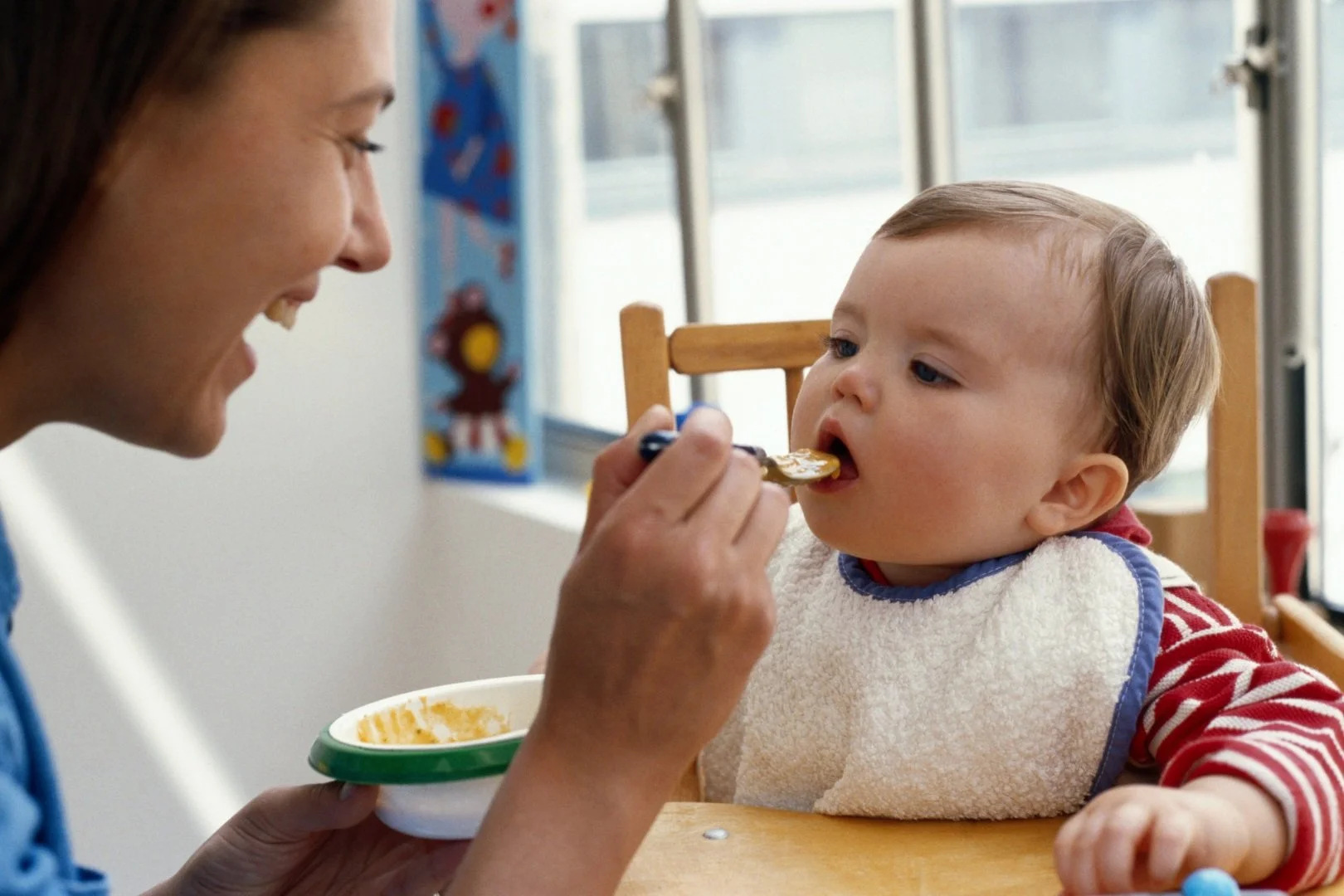
This online course takes you through the process of weaning your baby step by step. On the course I provide you with information for every detail of the beginning of the weaning process so that YOU can make the right CHOICE for you and your family!
Here’s how I can help:
Online Courses
I offer a range of different online courses to support different stages of your journey in feeding your little ones. I currently offer courses on breastfeeding from birth to 6 months, bottle refusal in breastfed babies, Introducing and fussy eating.
One-to-One support
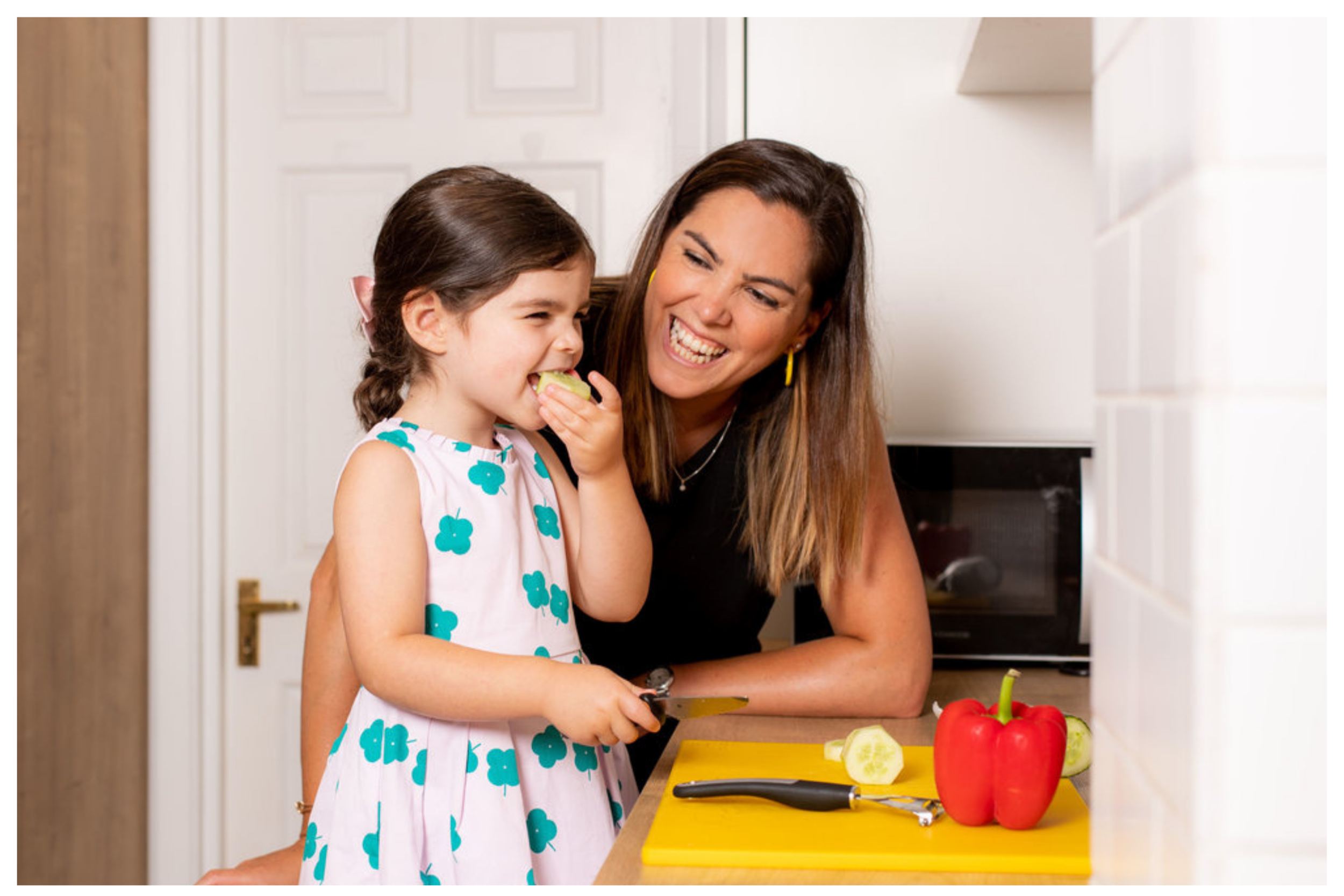
Myself and the Feed Eat Speak team offer customised one to one support in the form of feeding consultations and therapy, speech therapy, lactation and breastfeeding support and both 1:1 and group clinical supervision.
Industry expert
I work with parenting, breastfeeding, weaning and child feeding companies, providing expert social media and online content, PR copy and press releases and product review and development. Brands I have worked with include Elvie, Doidy cup and Doddl cutlery.
Over on the blog…
Fussy eating is a relatively common phenomenon in children with studies estimating that between 10-30% of preschool and primary school children are picky with their food(1).
Offering a bottle to breastfeeding baby may influence their breastfeeding.
This is not to say that you shouldn’t offer bottles if you want, nor that every baby who is bottle fed go on to develop challenges with breastfeeding. However, I do want to share this information you can introduce bottles in the most protective way in order to continue to breastfeed your baby in the way you want to!
In the UK as many as 81% of mothers initiate breastfeeding, however by 6 weeks of life only 55% are still doing any breastfeeding at all. Something is amiss. As a lactation consultant is important for me to empower families in the antenatal period to understand how breastfeeding works, know the practicalities of breastfeeding new-borns and to know how to tell it is going well.
Starting solid foods is an exciting time. It is a new phase in your baby’s development one that you understandably want to embrace, but how do you do it? What are the practical steps you need to take?
Bottle refusal in breastfed babies is a common phenomenon and for those families who choose for a bottle to feature as part of their breastfeeding journey it can be highly frustrating to be met with a baby who won’t take the bottle.
Worrying about babies not eating enough is common but so is worrying that your baby may be eating too much? It can be surprising how much some babies can eat in one sitting. Can a baby eat too much? In theory, yes, a baby can eat more food than they need are there are certain factors that may make this more likely.
Starting solid foods can be an exciting yet daunting time for a parent. There is so much information available about weaning but much of it is conflicting, making it hard to figure out the best way to go about it.
Colostrum Harvesting or Antenatal Hand Expressing is collecting your colostrum before your baby arrives.
Colostrum is the first milk your body makes for your baby, it’s packed full of calories, antibodies & growth factors.
Colostrum Harvesting or Antenatal Hand Expressing is collecting your colostrum before your baby arrives.
Colostrum is the first milk your body makes for your baby, it’s packed full of calories, antibodies & growth factors.
Carrying or babywearing is typically used to describe the act of supporting your child on your body using fabric or other means giving you your hands back. Although sometimes you may support them with your hands as well so that is usually called in arms carrying. Essentially carrying is a tool and it is something that can be useful for everyone.
Fussy eating is a relatively common phenomenon in children and it is widely agreed to be a part of normal toddler development. It tends to start between 12-18 months, peak at around 3 years and then gradually improve for the majority of children.
The effect of teeth on the breastfeeding relationship will very likely vary from day to day. I speak from experience when I say this. I had no awareness of my first erupting teeth and it had no impact on our breastfeeding, however with my second I was very aware, it affected his latch at times and he was prone to biting when teething.
When it comes to knowing how much to food to prepare for your weaning infant, or how much they ‘should’ be eating, many of us are lost. We scour the internet for guidance on portion sizes but can’t find the information. This is because there are no agreed portion sizes for infants.
So what influences how much a weaning baby may eat?
It’s often assumed that women with larger breasts will produce more milk and that having large breasts is therefore an advantage when you’re breastfeeding. In fact, there’s no correlation between the size of a woman’s breasts and her milk production. Women with larger breasts have more fatty tissue, not more glandular tissue, and the latter is where milk is produced.
A variety of questions come up, when parents are first thinking about starting solid foods with their infants. Lucy has written a very helpful frequently asked questions style blog to address all the things you need know!
Parent-child interaction has a significant impact on the development of a child's language. There is a positive correlation between the frequency of games, playing, singing and reading and the child’s expressive language.
Here are my ten top tips to promote language:
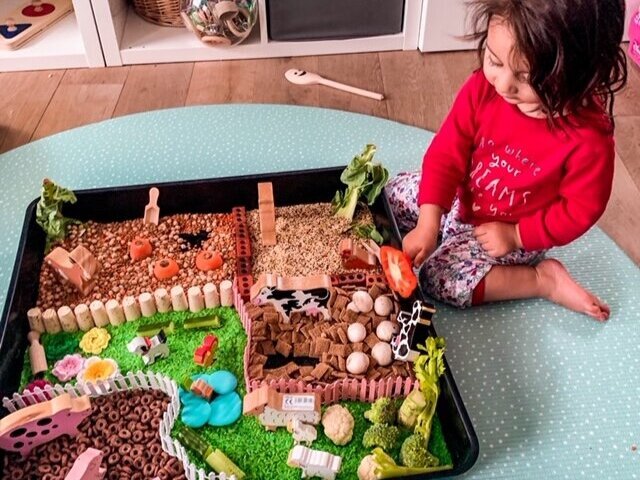
There is so much learning that can happen when children are given opportunities to explore and play with food. When I say ‘food’ I am covering both edible and dried food options too. It’s so important to give children the time and space to explore the sensory properties of different foods and become more comfortable with how it will eventually feel in their mouths. It gives them a context to play with food outside the regular meal times, which I have personally found, eases the pressure and gives my daughter the responsibility to decide whether she wants to have a taste or not.
Breast fed babies do not need to learn to bottle feed. However there may be circumstances where for personal reasons they may prefer their infant to take a bottle here and there. And this blog is for families who have made that choice but who are struggling to get their baby to accept a bottle.
I support families of children who have feeding difficulties, I also support many parents, usually mothers, who feel low and isolated and who tell me they feel they feel helpless or that they are failing. It is important to me to always talk to families about how they are feeling and the journey they have been are on as I strongly believe that families can be traumatised by challenging early feeding experiences and that part of my role is to listen and help.
Gagging is a reflex that is present from birth and remains with us for our whole lives. It’s purpose is to protect our airways and stop foreign objects and foods from ‘going down the wrong way’ and reduces the risk of us choking.
In babies the gag reflex is further forward in the mouth than it is in adults. By the age of 4-6 months your baby will begin to have some more control of this reflex, which coincides with being ready for weaning at around 6 months.
For many families, moving on from pureed solids can seem like a daunting task, when thinking about what textures to introduce, how to know if your baby is managing and what to do if they gag or choke as you progress through solid foods. This article will help you progress through textures and gives hints and tips to help if you get stuck on pureed foods.
Beginning the weaning journey with your little one is such an exciting time for so many reasons, but there is so much to prepare for! Between deciding when your baby is ready, choosing a highchair, first foods, baby led weaning or purees and so much more, it’s important not to forget that above all, any food you serve needs to be safe!
What is a tongue tie?
A tongue tie, also known as ankylogossia is where the small strip of tissue known as the lingual frenulum, which connects the tongue to the floor of mouth, is too short, too tight or too close to the gum ridge.
When this occurs, it can impact on tongue movement, which in turn can impact on the feeding process.
There are two types of tongue tie, anterior and posterior
I met Sam during my time studying for my IBCLC lactation consultant qualification. Sam was pregnant at the time. She gave birth to her gorgeous daughter Roisin in 2019. Roisin has Down syndrome. In order to raise awareness of Down's syndrome on World Down syndrome day 2020, Sam is sharing her feeding journey.
If you are struggling to feed your baby who you think may have reflux then this article is for you.
Gastro-oesophageal reflux (GOR) is a normal process where the contents of the stomach can come back up out of the stomach into the oesophagus and mouth. This affects babies, children and adults. In babies this can look like the effortless positing and regurgitation of feeds. In some cases, the symptoms are much more severe and may need treatment of some kind. This is known as Gastro-oesophageal reflux disease (GORD).
If you would you like to continue to breastfeed your baby or toddler once you go back to paid employment, but aren’t sure how to make it work, this article is for you.
Introducing snacks for weaning and then managing them for toddlers can be a bit of minefield. When I do my social media Q&A’s snacking one of the most common question themes that comes up.
Did you know that only around 1% of mothers are physically unable to make enough milk for their babies?
The most common conditions or circumstances which may impact on a mothers’ ability to produce milk include;
Polycystic Ovarian Syndrome (PCOS) - only 20% of women with this condition are likely to struggle with supply.
Insufficient glandular tissue
Starting weaning is an exciting milestone for you and your baby. However, if your child has a cow’s milk allergy, you may be worried about dairy free weaning. You may have questions like: what should a dairy free baby eat, what if they are allergic to something else, and how do I ensure they get enough calcium?
What people are saying about me…
“Stacey was excellent at assessing my son and coming up with practical solutions to his issues. We only needed one face to face consultation and his bottle feeding improved dramatically. We’ve never looked back! Highly recommend.”
“Stacey is absolutely incredible. She has supported me at multiple stages of my breastfeeding journey, including antenatally, and has always given brilliantly bespoke, compassionate and effective advice. I would thoroughly recommend her to anyone!.”
““I started following Stacey whilst I was pregnant as she was a feeding specialist and I knew Breastfeeding was so important to me. She has a wealth of free advice on her page and my breastfeeding journey began really well and has continued as such. At 7 months my baby went on a nursing strike and I panicked. Stacey was calm, reassuring and pointed me towards the right information, which has meant that we have continued feeding and life is once again peaceful. I cannot recommend Stacey enough, she is amazing. Without her I know my feeding situation would be so very different and my stress levels would be through the roof!”
“When Alice was about 8 months old, something just ‘clicked’ and she started enjoying all of her meals, including ‘wet’ food.
It was thanks to Stacey’s consultation and the programme that she gave - it helped us have the confidence to keep offering her the finger foods she liked over and over, and to ease our mind that there was nothing ‘wrong’ with Alice, and that some babies develop at different rates.
Alice now happily has her 2-3 meals a day (both finger food and sometimes spoon) and takes water from her cup too! It’s been amazing and I just wanted to thank Stacey so much for the consultation and reassurance.
Some people may think a private consultation is a ‘luxury’, but honestly, if I hadn’t had that call, I would have been worried sick for the two months that Alice wasn’t ready and not been relaxed, which she would have picked up on.”
“I began to work with Stacey after my tiny 5 month old’s seeming disinterest in the bottle had got extremely worrying. In a mere hour’s session, Stacey was able to identify the problem by watching Orly feed and reviewing the details of her recent feeds. With kindness and expertise, Stacey assured me that my daughter was consuming enough to sustain her growth and that her poor eating habits were rectifiable. She put together a workable plan for getting Orly’s eating on track which accommodated my own anxieties. Over the next couple of weeks, Stacey patiently guided me through the implementation of the plan, and address any of my concerns. Now Orly is enthusiastic about her feeds, and thanks to Stacey, I have peace of mind that my daughter is healthy and happy.”
“G’s first diagnosis was very stressful - we knew something was wrong - just not what and she was so young. From the start Stacey came in and took control. We know now what the problem is and how to fix it, as well as manage it long term. We really appreciate everything Stacey has done for G (and continues to do), going above and beyond and helping us to feel not only that she’s getting the best care, but also that we really understand and know how to help her. Thank you!”
“Early intervention was pivotal in our case and we had such incredible success with speech therapy for Lucas. It has been years since but we still cannot believe the difference in him. We unreservedly recommend Stacey, who was excellent at what she does but also tremendously patient in providing guidance to us parents throughout.”
“Stacey helped us when our son had complex feeding issues as a baby, through difficulties weaning and beyond. Her help has been invaluable, and we found her to be incredibly professional, knowledgable, pragmatic and supportive. I have no hesitation in highly recommending Stacey to other parents.”
“One day.... I changed how I gave her bottles based on what we discussed and she took 17 oz!!! Her mid morning milk was only 2 oz and she pushed it away but the rest were good bottles with little or no fighting. Best day in ages! Thank you so much x”
“Stacey's knowledge and practical advice is reliable and effective, she is always quick to respond to messages and she also provides a wide range of helpful extras from videos to articles and blogs, but what its really special is her huge sensitivity and genuine kindness.”
“I would like to thank Stacey for her professionalism and support. She helped during a difficult time with my daughter. She gave me small titbits of advice as well as helped me with big decisions. I definitely wouldn’t have been able to breastfeed without her help. She was a real mentor to me. ”
“Having a baby with feeding difficulties is a nightmare, that no parent should have to face without expert help and support. Stacey is clearly very experienced and has a good understanding of the complexities of feeding problems in children. She is a thoughtful listener and reflective practitioner. I appreciate her down to earth and pragmatic approach and her ability to empathise with both parent and child.”
“The first time we met Stacey she was a breath of fresh air and gave us real hope that she could help our son who had had a tough first year of his life and is hemiplegic. Stacey was able to identify very quickly what the issues were and what we needed to do to help our son. She was very clear that a team effort was required but if everyone pulled together we would see progress. We have! Our son now cannot stop talking!”
“I had supervision with Stacey when establishing a newly funded SLT service on my neonatal Unit. I found the sessions with Stacey extremely supportive and encouraging. She has such a wealth of knowledge of current evidence and practice feeding and swallowing difficulties in neonatal and acute hospital care, that she shared with me and supported me to develop my clinical skills and knowledge on this new post. Stacey was really flexible and accessible for ad hoc phone conversations when I was dealing with tricky clinical cases or situations and I felt this on line support helped develop my abilities.”

There is no one position to use to breastfeed your baby. What works well for one breastfeeding mother and baby may not work for another. What worked with one of your baby’s may not work for another. In addition, you may find some positions work better for you at different stages of your breastfeeding journey and for different times of the day or night.